




Is January the Best Time To Buy a Home?
From our friends at the kcm blog
Is January the best time to buy a home? While many buyers wait for the spring housing market, January can offer several advantages. Historically, buyers have benefited from lower home prices, less competition, and more opportunities to negotiate.
If you’re planning to buy a home in Marin County, Greenbrae, or San Francisco, understanding these seasonal trends can help you make informed decisions about when to begin your home search.
Kind of surprising, right? Here’s why January deserves a serious look.
1. Why January Home Prices May Be Lower
Lending Tree says January is the least expensive month to buy a home. And there’s something to that. January has historically offered one of the lowest price-per-square-foot points of the entire year. But the spring? That’s when demand (and prices) usually peak. And that’s not speculation – it’s a well-known trend based on years of market data.
One reason January may be the best time to buy a home is the seasonal slowdown in buyer activity. With fewer buyers competing for available properties, some sellers may be more willing to consider reasonable offers. However, pricing trends vary by neighborhood and property type.
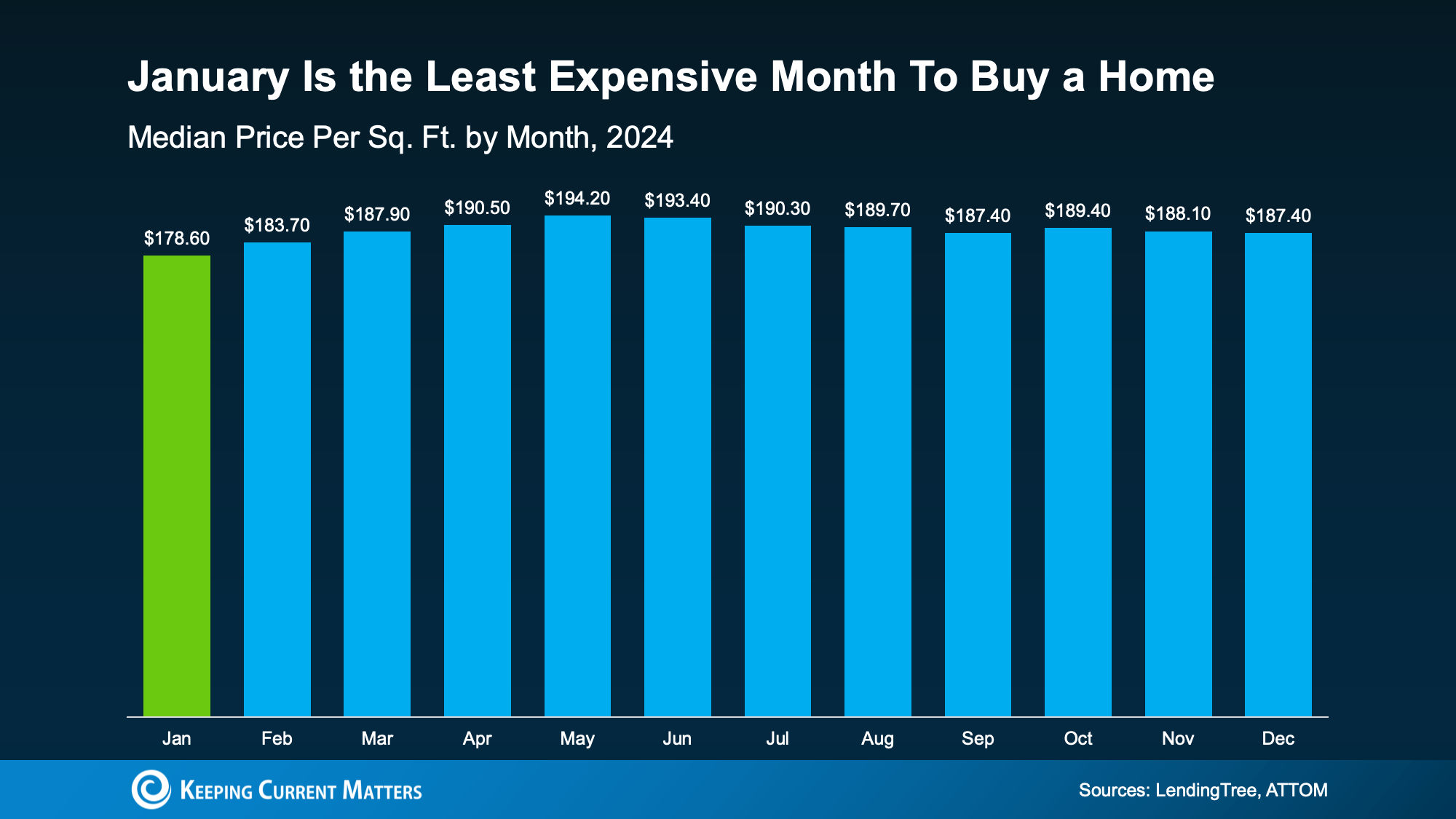
So, how much less are we talking? Here’s a look at the numbers. According to the last full year of data, for the typical 1,500 square foot house, buyers who closed on their home in January paid around $23,000 less compared to those who bought in May. And that general trend typically holds true each year (see chart below):
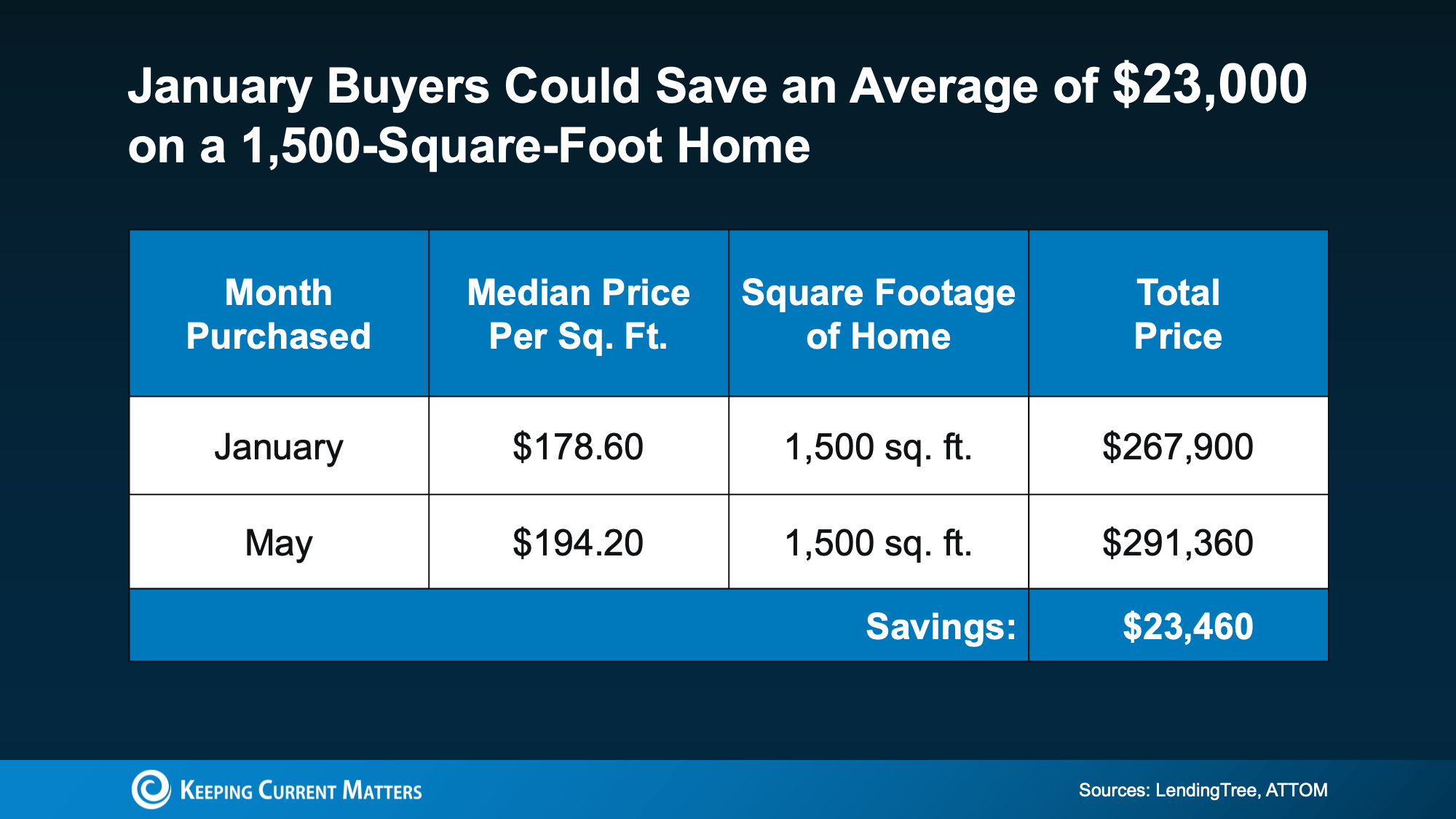 Now, your number is going to depend on the price, size, and type of the home you’re buying. But the trend is clear. For today’s buyers, it’s meaningful savings, especially when affordability is still tight for so many households.
2. Less Competition and More Negotiating Power
And why do buyers typically save in the winter? It’s simple. Winter is one of the slowest times in the housing market each year. Both buyers and sellers tend to pull back, thinking it’s better to wait until spring. And that means:
- You face less competition
- You’re less likely to get into a multiple offer scenario
- Sellers are more willing to negotiate (since there aren’t as many buyers)
With fewer buyers in the market, you can take your time browsing.
But winter doesn’t just thin out the pool of buyers, it also reveals which sellers truly need to sell. Because fewer people are house hunting during the colder months, sellers who really need to move tend to be more open to negotiating. As Realtor.com explains:
“Less competition means fewer bidding wars and more power to negotiate the extras that add up: closing cost credits, home warranties, even repair concessions. . . these concessions can end up knocking thousands of dollars off the price of a home.”
This can include everything from price cuts to covering closing costs, adjusting timelines, and more. It doesn’t mean you’ll automatically get discounts on every home. But it does mean you’re more likely to be taken seriously and given room to negotiate.
Is January the Best Time to Buy a Home?
Here’s the real takeaway. When you remove the pressure and frenzy that comes with the busy spring season, it becomes much easier to get the home you want at a price that fits your budget.
But if you wait until spring, more buyers will be in the market. So, waiting could actually mean you spend more and you’d have to deal with more stress.
Now, only you can decide the right timing for your life, but don’t assume you should wait for warmer weather before you move.
For budget-conscious buyers, January can be an attractive time to explore the housing market. Whether you’re searching in Marin County or San Francisco, working with a knowledgeable local real estate agent can help you compare available homes, evaluate pricing, and identify potential opportunities.
If you’re considering buying a home in Marin County, Greenbrae, or San Francisco, the Jenn Pfeiffer Team can help you explore available properties and understand local housing market conditions.
Buying in January gives you: less competition, potentially lower prices, and more motivated sellers. And those are three perks you’re not going to see if you wait until spring.
What This Means for Marin County Homebuyers
Buying a home in January may offer advantages that are harder to find during the busy spring season. Lower seasonal prices, fewer competing buyers, and more opportunities to negotiate can make winter an appealing time to explore the market.
However, the best time to purchase a home depends on your budget, financial readiness, and local housing conditions.
If you’re planning to buy a home in Marin County, Greenbrae, or San Francisco, connecting with an experienced local real estate agent can help you identify properties that match your needs and make a confident purchasing decision.