



Headlines Have You Worried about Your Home’s Value? Read This.
From our friends at the kcm blog
Are home prices in 2026 falling? If you’ve been following housing market headlines, you may be wondering whether your home is losing value. While some local markets have experienced slight price declines, national housing data from late 2025 showed a different picture.
Understanding local real estate trends can help homeowners in Marin County, Greenbrae, and San Francisco put these changes into perspective.
The vast majority of the country is actually seeing prices rise.
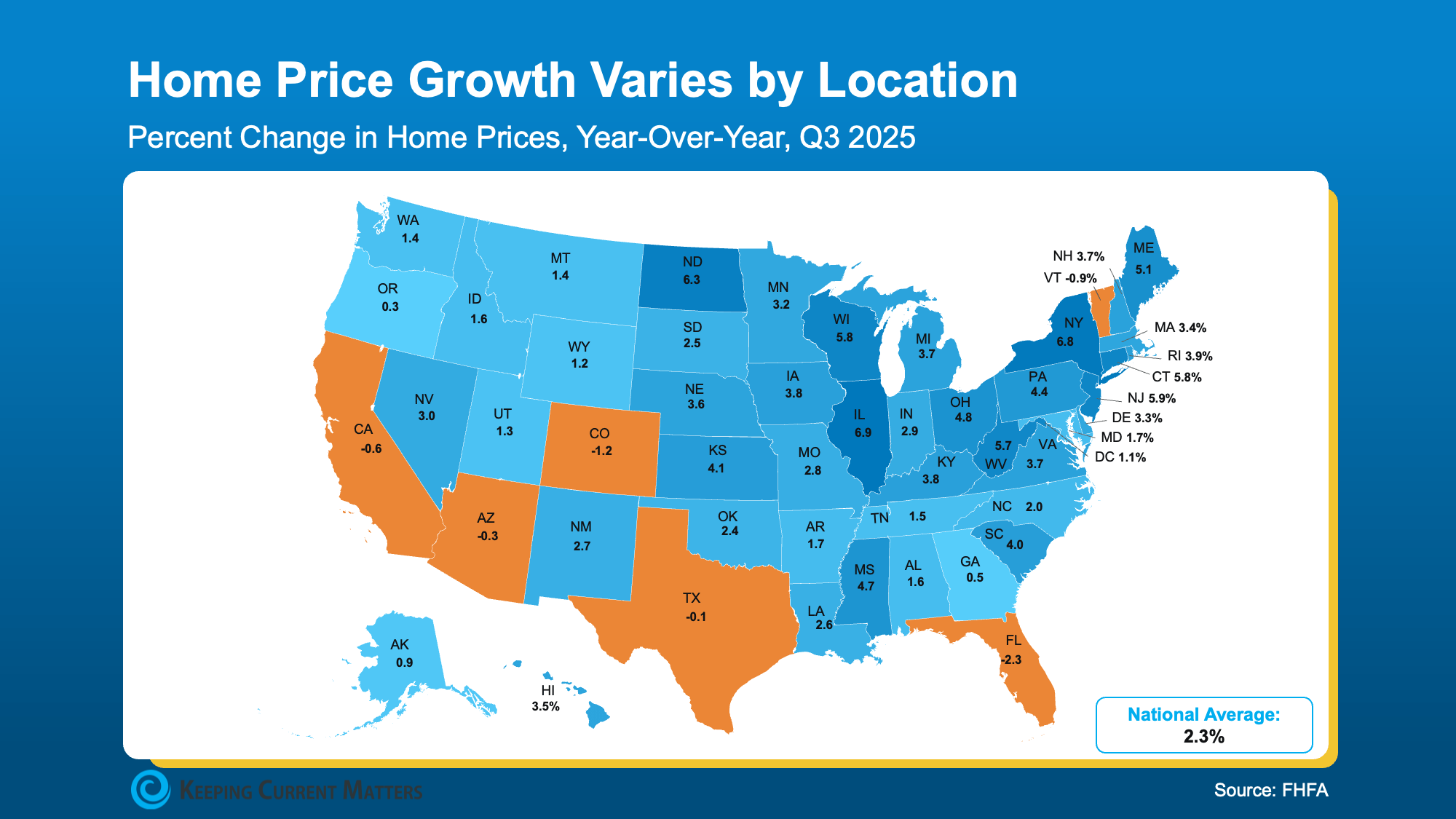
While that may feel surprising after the headlines you’ve seen, the map below uses year-over-year data from the Federal Housing Finance Agency (FHFA) to make that clear:
Why Home Prices Vary by Location
When evaluating home prices in 2026, it’s important to understand that housing trends vary by location. Some states experience steady appreciation, while others see small price corrections. These differences highlight why local market data matters more than national headlines alone.
Most states are seeing prices rise (the blue in that map). Not fall. Now, the gains aren’t as big as they’ve been in recent years, but that’s okay. The story is still, prices are growing. And that positive majority is exactly why data from the National Association of Realtors (NAR) shows, nationally, home prices are up 2.1% compared to last year.
But the headlines don’t draw attention to this. They feed on the negative. But even that isn’t as bad as it sounds.
Yes, there are some states where homes have lost value over the past 12 months (the orange in the map above). That’s what all the chatter is drawing attention too. But here’s what the data really says.
The dips aren’t happening everywhere. And in the select states where prices are inching down, it’s slight. The range here is -0.1 to roughly -2%.
And those states are the ones where prices spiked too high, too fast during the pandemic housing boom. There was always going to be a come down period after that. Now, we’re in it. In those places, prices are leveling off. And that’s a sign of normalization, not collapse.
In plain terms: Home prices aren’t crashing. And this isn’t doom and gloom or the sign of broader trouble.
What Home Prices in 2026 Mean for Homeowners
Just to drive that point home, here’s one more thing to reassure you. Even in the few places where prices dipped slightly, most homeowners are still way ahead. Additional context from Zillow helps prove that point:
- Only about 4% of homes are worth less than what the owner originally paid.
- And 96% of homes are still worth more than their homeowners paid for them.
But don’t just take their word for it, see for yourself. When you zoom out and look at how much home prices have grown over the past five years, it’s a lot easier to understand why so many homeowners are still in such great shape.
Although home prices in 2026 may fluctuate in certain markets, many homeowners have benefited from substantial appreciation over the previous five years. Reviewing recent comparable sales can provide a clearer picture of your property’s current market value.
Nationally, prices are up almost 49% in the last 5 years alone, and just about everywhere saw double-digit price growth in that time frame. That’s why there’s no orange in this map (see below):
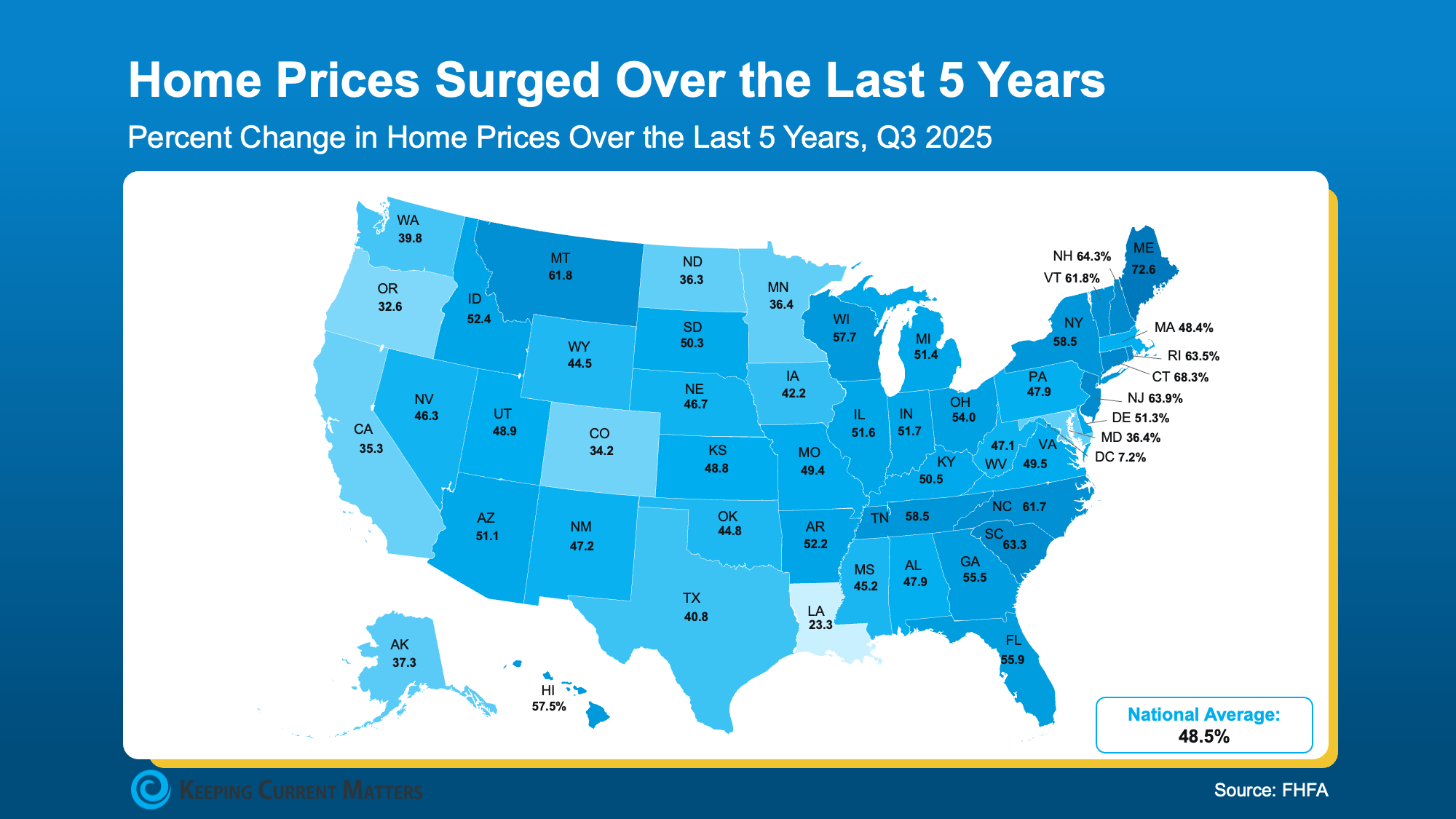
The truth is, across the board, homeowners are still sitting on substantial gains. So, the -0.1 to -2% declines some states are seeing now? That’s easily absorbed.
So, don’t let the headlines scare you. What’s happening with home prices this year varies a lot from one area to the next. But the takeaway is clear: a small dip in some areas doesn’t mean your home’s value is collapsing.
It means select local markets are correcting – and most of the time these are the ones that saw prices rise the most during the pandemic. You’re probably still in great shape.
If you’re wondering how national housing trends compare with your neighborhood, the Jenn Pfeiffer Team can help you understand property values and real estate market conditions in Marin County, Greenbrae, and San Francisco.
Understanding Your Home’s Long-Term Value
While headlines about falling home prices can be concerning, the national housing data from late 2025 showed that many homeowners continued to benefit from substantial long-term appreciation.
However, housing market conditions vary by location. Some markets may experience temporary price corrections, while others continue to see steady demand and price growth.
If you’re wondering what your home is worth in Marin County, Greenbrae, or San Francisco, consulting an experienced local real estate agent can help you evaluate recent sales, neighborhood trends, and your property’s current market value.